Showing posts sorted by date for query Dhyani Buddhas. Sort by relevance Show all posts

Sunday, December 15, 2024

The Luminous One - Buddha Vairocana


Vairocana
Also known as the Luminous One, Vairocana is a major Buddha in Mahayana and Vajrayana Buddhism. 

Vairocana is often seen as the Dharmakaya, or supreme Buddha-body, of the historical Buddha, Gautama. 

Vairocana is also the embodiment of wisdom and purity and the Buddhist concept of emptiness (sunyata). 

Vairocana is often depicted in the Dharmachakra mudra, where the thumbs and index fingers of both hands touch to form a circle. 

Vairocana is a cosmic Buddha in Mahayana and Vajrayana Buddhism and an important figure in Buddhism in East Asia, Tibet, Nepal, and Java: 

  • Meaning
    Vairocana is also known as the Luminous One, the Great Universal Light, and the Illuminator. 
     
  • Role
    Vairocana is the original of the five Transcendent Buddhas of Vajrayana Buddhism. He is considered the primordial Buddha and is thought to reside at the center of Buddhist cosmology. 
     
  • Iconography
    Vairocana is often depicted sitting on a high throne and a double lotus, with his hands in the gesture of teaching, known as the "Turning of the Wheel of Law" (dharmacakramudra). 
     
    Interpretation
  • Vairocana is often interpreted as the dharmakāya of the historical Gautama Buddha. In East Asian Buddhism, Vairocana is also seen as the embodiment of the Buddhist concept of śūnyatā. 
     
  • Significance
    Vairocana's portrayal inspires people to rise above the ordinary and connect with the cosmic forces that permeate the cosmos.
What are the benefits of Vairocana Buddha?

Buddha Vairocana is a radiant symbol of enlightenment, wisdom, and universal compassion. Vairocana Buddha is a well-known and iconic figure in the Mahayana school of Buddhism, particularly in the Vajrayana and kindred esoteric traditions. 

Who is Virochana in Buddhism? 

Vairochana is the original of the five Transcendent Buddhas of Vajrayana Buddhism, identified by his hands held in bodhyagri mudra, an esoteric gesture denoting the zenith of the universe. Considered the primordial Buddha, he is understood to reside at the center of Buddhist cosmology.

In Tibetan Buddhism, Vairocana Buddha is known as Namnang or Nampar nangdze. He is a central figure in Buddhism, representing the essence of Dharma realm meditation mudra and the profound wisdom of Sunyata.

Vairochana Buddha, known as Namnang in Tibetan Buddhism, holds the highest position among the Pancha Buddhas. As the Primordial Buddha, Vairochana personifies the profound wisdom of Sunyata and embodies the essence of Dharma realm meditation mudra.

What is the symbol of the Vairocana Buddha? 

His symbol is the Dharma wheel. When all five Dhyani Buddhas are depicted together in a mandala, Vairocana is placed in the center. He is often shown larger than other Buddhas around him.

What is the meaning of the Buddha Vairocana mantra? 

The translation of this mantra is Praise be to the unfailing, all-pervasive illumination of the great mudra (or seal of the Buddha), the jewel, the lotus, and the radiant. 

Do you earnestly cherish our devoted work?

Assuming this is the case, we are delighted that you are finding our blog useful and valuable. Would you please consider making a donation for our Buddhist research and development?

Please support us via PayPal here: 

https://bit.ly/3ywRH2N

 *Footnote
Vajrayana features countless skillful and powerful methods that, if practised in the proper way, can make the process of accumulation and purification incredibly swift and direct. 

It is absolutely necessary to have pure motivation and to know that Vajrayana practise is not carried out to increase one’s own ego, power, or self-interest.

Thank you for reading. May you find peace and great bliss. With your support, it helps to spread the Buddha’s precious teachings and turn the Dharma wheels in the world.

Aspiration For Bodhichitta
For those in whom the precious Bodhichitta has not arisen
May it arise and not decrease.
But increase further and further.

Dedication of Merit
By this merit, may we then obtain omniscience then.
Having defeated the enemies wrongdoings
May we liberate migratory from the ocean of existence.
With its stormy waves of birth, old age, sickness, and death.

 *Note
I do not own or infringe any copyright on the picture(s).
Picture(s) courtesy and credit to the rightful
distributors and/or studios
The picture(s) are intended for editorial use only.




Wednesday, November 20, 2024

Amitabha Buddha is The Principal Buddha of Western Pure Land


Who is Amitabha Buddha?
Amitabha Buddha is the principal Buddha of Western Pure Land Buddhism. He is also known as Amitayus, which is understood to be his enjoyment body. (Sambhogakaya)

The Sanskrit word Amitabha means "infinite light" or "immeasurable light." It is made up of the words amita meaning "infinite" and ābhā meaning "light. 

In Buddhism, Amitabha is a Bodhisattva who rules over a pure land in the west of the universe. He is also known as Amida Buddha in Japanese. The Chinese pronunciation for Amitabha is "阿弥陀佛"  

Amitabha is often depicted seated, wearing a monk's robe, with his hair in hundreds of curls and a cranial bulge at the top.

The name Amitayus is also used for the Sambhogakaya aspect of Amitabha, which is associated with longevity. In Tibetan Buddhism, Amitayus is one of the three deities of long life. 

In Vajrayana Buddhism, Amitabha is known for his longevity, discernment, pure perception, and the purification of aggregates with deep awareness of the emptiness of all phenomena. 

Amitabha is associated with the Diamond Realm (vajradhatu), whereas Amitayus is associated with the Womb Realm (garbhakosadhatu). 

What does Om Ah Hum Hrih mean?

Therefore, by reciting “Om Ah Hum," you receive the blessings of all Buddhas. “Hrih” is the core seed syllable of the Three Root magnetizing deities of the Lotus Family and represents the natural radiance of the wisdom of discernment.

Om Ami Deva Hrih” is the heart mantra of Amitabha Buddha, a Sutra mantra taught by Buddha. 

The mantra “Om Ami Deva Hrih” is said to have many benefits, including:

Liberation from deluded thoughts

The mantra is said to help free the practitioner from thoughts and beliefs that are not serving them. 

Protection

The mantra is said to provide protection from evil spirits, heavenly gods, and 25 great Bodhisattvas. It is also said to protect the practitioner from accidents, fire, floods, and weapons. 

Rebirth in Amitabha's Pure Land

The mantra is said to help the practitioner be reborn in Amitabha's Pure Land, ending the cycle of birth and death. 

Clarity of goals

The mantra is said to help the practitioner clear mental clutter and gain clarity on their life goals. 

Purification of the six worlds

The mantra is said to purify the six worlds: the deva realm, asura realm, human, animal, hungry ghost, and hell realms. 

Empowerment of the six perfections

The mantra is said to empower the six perfections, which are the perfection of generosity, the perfection of ethics, the perfection of patience, the perfection of joyful effort, the perfection of concentration, and the perfection of Wisdom. 

Vajrayana Buddhism

Amitabha is also known in Tibet, Mongolia, Nepal, India, and other regions where Tibetan Buddhism is practiced. 

In the Highest Yogatantra of Tibetan Buddhism, Amitabha is considered one of the Five Dhyani Buddhas, also known as the Five Tathagatas together with Akshobhya, Amoghasiddhi, Ratnasambhava, and Vairocana. 

Amitabha is associated with the western direction and the skandha of saṃjna, the aggregate of perception, or distinguishing, and the deep awareness of individuality.

In Tibetan Buddhism, there exist a number of famous prayers for taking rebirth in Sukhāvatī (Dewachen). 

One of these was written by Je Tsongkhapa on the request of Manjushri. Amitabha is primarily invoked in Tibet during the phowa practices, or invoked as Amitayus—especially in practices relating to longevity and preventing an untimely death.

Do you cherish our devoted work? 

Assuming this is the case, we are delighted that you are finding our blog useful and valuable. Would you consider making a donation for our Buddhist research and development? 

We need your help to secure the future of scholarly interaction with Buddhism. Since our very first publication of Dharma works and activities in 2008, we have been effortlessly providing free distribution of Dharma posts and articles throughout the previous 16 years. 

We have exceptionally constrained support and do not receive subsidies or funding from people in general.

Please help us develop our Dharma activities that will not only benefit you but all Dharma readers on the planet. Please consider showing your support. Your generosity will certainly help us enhance our work and accomplish more for a better and brighter future.

Thank you for reading. May you find peace and great bliss. With your support, it helps to spread the Buddha’s precious teachings and turn the Dharma wheels in the world. 

Aspiration for Bodhichitta
For those in whom the precious Bodhichitta has not arisen, may it arise and not decrease. But increase further and further. 

Dedication of Merit 
By this merit, may we then obtain omniscience then. 

Having defeated the enemies wrongdoing. May we liberate migratory from the ocean of existence.
With its stormy waves of birth, old age, sickness, and death.

*Note.
I do not own or infringe any copyright on the picture(s).
Picture(s) courtesy and credit to the rightful distributors and/or studios
The picture(s) are intended for editorial use only.


Tuesday, May 30, 2023

Kalachakra - The Manifestations of Cyclic Existence and Nirvana

 
What is meant by Kalachakra?
The word Kalachakra means cycles of time, and the Kalachakra system presents three such cycles: external, internal, and alternative. The external and internal cycles deal with time as we normally know it, while the alternative cycles are practises for gaining liberation from these two.

Kalachakra is one of the many Tantric teachings and esoteric practises in Tibetan Buddhism. The tradition's roots are in India, but its most active history and presence have been in the monasteries of Tibet. The tradition is a form of nondualism, and it is believed that the Kalachakra was taught by the Buddha himself.
What is the Kalachakra practice?
It depicts a mythic reality whereby cosmic and socio-historical events correspond to processes in the bodies of individuals. These teachings are meant to lead to a transformation of one's body and mind into perfect Buddhahood through various yogic methods.

What is Kalachakra meditation?
In the practice of Kalachakra , and any other anuttarayoga tantra , there is a special way of meditating on voidness ( emptiness ) in which we meditate not just on the actual meaning of voidness , but also try to simulate doing this with a clear, light mind .

What are the stages of the Kalachakra Tantra? 
Like all Anuttara Tantras, the Kalachakra practise is divided into two stages: 
  1. A generation stage where the primary concern is with the visualisation of oneself as a deity within the context of a mandala.
  2. A completion stage where the primary concern is with the purification of one’s winds and drops within the central channel, a process that culminates in the attainment of Buddhahood.
Time and cycles
The Kalacakratantra revolves around the concepts of time (kala) and cycles or wheels (chakra). Conventionally speaking, this refers to the cycles of the planets, the cycles of human breathing, and the subtle energies in the body. 

Regarding the outer or external aspect of conventional reality, the wheel of time refers to the passage of days, months, and years (as well as the cycles of the zodiac), while with regard to the individual or inner aspect, it refers to "the circulation of pranas [vital airs] within the wheel of the nadis [subtle channels] in the body," which is linked with the 12 aspects of dependent origination and the 12 signs of the zodiac. These different cycles are interconnected and correspond to each other.

In the first chapter, it is stated that the world emerges from emptiness and the force of time, which is a kind of power that originates the universe.

Because of time (kalat), from the voids (sunyesu), originate wind, fire, water, and the earth; the continents, mountains, and oceans; the constellations, the sun, the moon, the host of star-planets, and the sages; gods, bhutas, and nagas; animals that have four types of birthplace; humans and hell beings also, on the manifold earth and below; originate in the middle of the void (sunyamadhye), like salt in water, and the egg-born in the middle of an egg.

The nonduality of two facets of a single reality—namely, wisdom (prajña), or emptiness (sunyata), and method (upaya), or compassion (karuna). The word "time" refers to the gnosis of imperishable bliss (aksara-sukha-jñana), which is called a method consisting of compassion, and the word "wheel" designates wisdom consisting of emptiness. Their unity is the Buddha Kalacakra

Thus, Kalacakra refers to the manifestations of cyclic existence and nirvana, as well as their causes. Kalacakra therefore represents a single unified reality (also called Adibuddha, Sahajakaya, Jnanakaya, Sahajananda, and Vajrayoga). When this reality manifests itself as numerous phenomena, it is called samsara. 
Adibuddha
In Vajrayana Buddhism, the Adi-Buddha is the "First Buddha" or the "Primordial Buddha". Another common term for this figure is Dharmakaya Buddha. 

Adibuddha : The original Buddha, eternal with no beginning and no end.

Adi Buddha (the primaeval Buddha) The original Buddha Buddhist. The primordial force in the cosmos from whom the five Dhyani Buddhas arose. The embodiment of the concept of emptiness. He is considered by some authorities to be identical with Vaharaja and Vajrasattva. His image, sitting on a lotus leaf, is often carried by other Buddhist deities.

However, the Kalacakratantra is clear that Kalacakra is itself empty of inherent existence (i.e., essence) and is not an independent phenomenon but one that is dependent on conditions (a classic Madhyamaka position). 

The cosmic body and the body of the individual are made up of various cycles of dependent origination. Furthermore, "each cycle of dependent origination, which comprises progressively smaller cycles of dependent origination, arises in dependence upon other cycles of dependent origination and is therefore itself empty of inherent existence."

The Kalacakratantra summarises its fundamental doctrines in the following passage:

Identitylessness, the maturation of karma, the three realms, the six states of existence, the origination due to the twelve-limbed dependence, the Four Truths, the eighteen unique qualities of the Buddha, the five psycho-physical aggregates, the three bodies, the Sahajakaya, and animate emptiness. The system in which these are taught is the clear and definite instruction of the Vajri.    
Donations for our Buddhist research and development
Do you earnestly cherish our devoted work? Assuming this is the case, we are delighted that you are finding our blog useful and valuable. Would you consider making a donation for our Buddhist research and development?  

We need your help to secure the future of scholarly interaction with Buddhism. Since our very first publication of Dharma works and activities in the year 2008, we had been effortlessly providing free distribution of Dharma posts and articles throughout the previous 14 years.  We have exceptionally constrained supports and do not receive subsidized or funding from people in general. 

Please help us and to develop our Dharma activities that will not only benefit you, but to all Dharma readers on the planet. Please consider showing your support. Your generosity will certainly help us to enhance our work and to accomplish for a better and brighter prospect to come. 

Thank you for reading, may you find peace and great bliss. With your support it helps to spread the Buddha’s precious teachings and turning the Dharma wheels in the world.

Aspiration For Bodhichitta
For those in whom the precious Bodhichitta has not arisen
May it arise and not decrease
But increase further and further.

Dedication of Merit
By this merit may we obtain omniscience then.
Having defeated the enemies wrong-doings.
May we liberate migratory from the ocean of existence.
With its stormy waves of birth, old age, sickness and death.

*Note
I do not own or infringe any copyright of the picture(s).
Picture(s) courtesy and credit to the rightful distributors and or studios.
Picture(s) is/are intended for editorial use only.


Tuesday, July 19, 2022

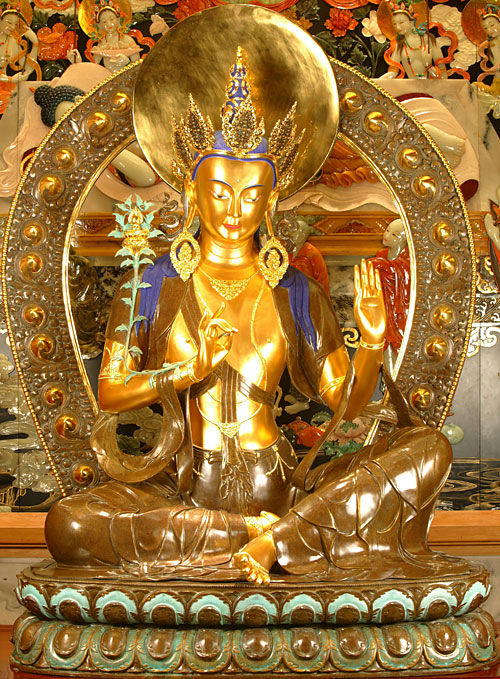
Limitless Tara, Beyond the Green: Bodhisattva, Savior, Mother of all the Buddhas


Most Buddhists know Tara—simultaneously, a friend, savior, caring Bodhisattva and enlightened being.

She manifests in endless forms: she can be action-hero Green Tara who saves us from worldly harm; or blessed White Tara, who heals and brings longevity, to fierce protector Palden Lhamo, and she is also the great Wisdom Mother Prajnaparamita. Even though we honor her as the Great Mother Buddha, she is, without contradiction, an intimate and treasure friend. 
The Vastness of Tara: Beyond Definition, Friend to Everyone
Do we really comprehend the vastness that is Tara? She is one of the most popular devotional and meditational deities, honored all around the world, practiced by all schools of Vajrayana Buddhism, many Mahayana Buddhists, Hindus, and others.

She is so popular, she is called “Mama Tara”—and She never takes Herself seriously. She’s a daily good friend, ready helper, saving hero, precious guide. She always has “time” for everyone—after all, time is relative. She is just as quick to help the prisoner in jail as the faithful practitioner, without discrimination. If Her name is called, She answers.
Yet, Tara goes beyond any constraints of conception, and even imagination: Parajnaparamita, wisdom Dakini Varjayogini, Female Buddha, Consort of great Amoghasiddhi Dhyani Buddha, Hindu great mother, angel to those in distress — all of these and thousands more. There are 21 famous Tara manifestations, one of which is the beloved White Tara. In Vajrayana’s higher tantras she is Chittimani Tara and also, Vajrayogini (Vajra Varahi).

It can be confusing, Her endless labels, but at the same time it defines Her perfection. She is known by endless names, but consistently as Tara, Arya Tara, and, in Tibetan, Jetsun Drolma. She is simultaneously the spiritual child of Avalokiteshvara, born of tears of compassion, and the Mother of the very same Buddha. Mother and child of the same Enlightened Being. Simply meditating on the vastness of these concepts is, in itself, challenging and rewarding.
Her Practice Is as Simple or Complex as Tara
As with Her vast array of names, appearances and roles, Her practice can be simple or profound. She responds well to just the calling of Her name. Or a simple thought. Her ten-syllable mantra, chanted millions of times each day around the world, is associated with everything from rescues to achieving Enlightenment.

Simplified Sadhanas for the devout include Green Tara and White Tara practices that can be practiced with or without empowerment. As a practitioner progresses, Tara meditations can become more intense, with Highest Yoga Tantra practices such as Chittamani Tara. Even the famous 21 Taras, can be practiced simply—as a daily verse—or at the ultimate level, with 21 separate sadhanas and mantra

She can be practiced in the form of the great Black Dakini, Throma Nagmo, the wrathful form of Prajnaparamita—a Highest Yoga Practice (mana annut tantra). She can be practiced even without a name, just by simply imagining Her. There is, literally, a Tara, and a Tara practice, for everyone.
Dana (Donations for our Buddhist research and development) 
Do you earnestly cherish our devoted work? Assuming this is the case, we are delighted that you are finding our blog useful and valuable. Would you consider making a donation for our Buddhist research and development?  

We need your help to secure the future of scholarly interaction with Buddhism. Since our very first publication of Dharma works and activities in the year 2008, we had been effortlessly providing free distribution of Dharma posts and articles throughout the previous 13 years.  We have exceptionally constrained supports and do not receive subsidized or funding from people in general. 

Please help us and to develop our Dharma activities that will not only benefit you, but to all Dharma readers on the planet. Please consider showing your support. Your generosity will certainly help us to enhance our work and to accomplish for a better and brighter prospect to come. 

Thank you for reading, may you find peace and great bliss. With your support it helps to spread the Buddha’s precious teachings and turning the Dharma wheels in the world.

Aspiration For Bodhichitta
For those in whom the precious Bodhichitta has not arisen
May it arise and not decrease
But increase further and further.

Dedication of Merit
By this merit may we obtain omniscience then.
Having defeated the enemies wrong-doings.
May we liberate migratory from the ocean of existence.
With its stormy waves of birth, old age, sickness and death.

*Note
I do not own or infringe any copyright of the picture(s).
Picture(s) courtesy and credit to the rightful distributors and or studios.
Picture(s) is/are intended for editorial use only.


Tuesday, June 28, 2022

Buddha Akshobhya - Long Mantra Prayers And Blessings


*Buddha Akshobhya - Long Mantra*

Namo Ratna Trayaya
Om Kamkani Kamkani
Rochani Rochani
Trotrani Trotrani
Trasani Trasani
Pratihana Pratihana
Sarva Karma Paramparani me Svaha 

Akshobhya (Immovable One) is one of the five Dhyani Buddhas, along with Ratnasambhava, Vairocana, Amitabha, and Amoghasiddhi.

He originates from the blue seed mantra “Hum” and when He became a Buddha and reached enlightenment, Akshobhya was given charge over the eastern paradise, called The Ultimate Joy (Pure Land Abhirati).

His consort is Lochana (Lochana is said to be similar in nature to Lord Vairochana) and He is normally accompanied by two elephants.
Akshobhya Buddha is mentioned in a few Mahayana sutras, but mostly He is known from the Vimalakirti Nirdesa (the sutra that teaches the meaning of Nondualism).

The Buddha Akshobhya established with the enlightened intention that all sentient beings could purify any degree of non virtue. Even the extreme non virtue of hatred, violence, and killing can be cleansed through relying on him as the focus of meditation, acknowledging and abandoning non virtuous actions, and invoking his blessings of purification. 
In the Akshobhya sutra, the Buddha Sakyamuni himself extolled the perseverance of Akshobhya in actualizing this intention so powerfully that countless beings have been saved from the intense suffering of the lower states of existence.

Akshobhya meditation can liberate, not only the practitioner him or herself from the fear of inauspicious rebirth, but other beings as well. Akshobhya explicitly promised that the merit generated by reciting one-hundred-thousand of his long Dhayani mantra and creating an image of him could be dedicated to another person,  even someone long deceased, and they would be assured of release from lower states of existence and rebirth in spiritually fortunate circumstances. 
Recognizing the superb opportunity of their own connection with Akshobhya, hundreds of people have either performed this practice themselves or sponsored it, dedicating the merit to others for whom they felt compassionate concern.

Only an omniscient wisdom being can fully discern an individual's past actions and their outflows in present experience, but the Buddhist teachings indicate that death during the passage toward birth (by miscarriage or abortion), death before adulthood, violent or fearful death, and suicide are signs that the deceased might have difficulties in obtaining fortunate, spiritually well-endowed rebirth. Such beings could benefit from the merit of a hundred thousand Akshobhya recitations and the creation of an Akshobhya image.

* Footnote 
For those who had received the empowerment of this Tantric practice, you are reminded not intentionally or unintentionally to disclose the mantra to the public or anyone who may not have the empowerment or permission to practice, and by disclosing the mantra intentionally or unintentionally is a form of breaking your Tantric Samaya vows to the lineage masters and Dharma protectors. 

Please consult your Guru or a qualified lineage master for Vajrayana practice! Should a devotee even want to start studying and contemplating the Vajrayana practice, then it is truly necessary to first have completed the preliminaries and to be certain and sure that Bodhicitta has arisen and developed in one’s mind.

Vajrayana features countless skillful and powerful methods which, if they are practiced in the proper way, can make the process of accumulation and purification incredibly swift and direct. It is absolutely necessary to have the pure motivation and to know that Vajrayana practice is not carried out to increase one’s own ego, power and self-interests.

Dana (Donations for our Buddhist research and development) 
Do you earnestly cherish our devoted work? Assuming this is the case, we are delighted that you are finding our blog useful and valuable. Would you consider making a donation for our Buddhist research and development?  

We need your help to secure the future of scholarly interaction with Buddhism. Since our very first publication of Dharma works and activities in the year 2008, we had been effortlessly providing free distribution of Dharma posts and articles throughout the previous 13 years.  We have exceptionally constrained supports and do not receive subsidized or funding from people in general. 

Please help us and to develop our Dharma activities that will not only benefit you, but to all Dharma readers on the planet. Please consider showing your support. Your generosity will certainly help us to enhance our work and to accomplish for a better and brighter prospect to come. 

Thank you for reading, may you find peace and great bliss. With your support it helps to spread the Buddha’s precious teachings and turning the Dharma wheels in the world.

Aspiration For Bodhichitta
For those in whom the precious Bodhichitta has not arisen
May it arise and not decrease
But increase further and further.

Dedication of Merit
By this merit may we obtain omniscience then.
Having defeated the enemies wrong-doings.
May we liberate migratory from the ocean of existence.
With its stormy waves of birth, old age, sickness and death.

*Note
I do not own or infringe any copyright of the picture(s).
Picture(s) courtesy and credit to the rightful distributors and or studios.
Picture(s) is/are intended for editorial use only.


Saturday, June 11, 2022

Buddha Akshobhya Prayers

Buddha Akshobhya (Mitrugpa) Mantra by H.H. 17th Karmapa

*”Namo bhagavate Akṣhobhāya, 
tathāgatāyārhate saṃyaksaṃbuddhyāya.
Tadyathā: Oṃ kaṃkani kaṃkani. Rochani rochani.
Troṭani troṭani. Trāsani trāsani. 
Pratihana pratihana.
Sarva karma paraṃparāṇime sarva sattvānañcha svāhā.”

*Short mantra: Om Akshobhya Hum
Akshobhya is the embodiment of 'mirror knowledge' (Sanskrit: ādarśa-jñāna; refer Panchajnana). This may be described as a knowledge of what is real, and what is illusion, or a mere reflection of actual reality. The mirror may be likened to the mind itself. It is clear like the sky and empty, yet luminous. 

It holds all the images of space and time, yet it is untouched by them. Its brilliance illuminates the darkness of ignorance and its sharpness cuts through the confusion. Akshobhya represents this eternal mind, and the Vajra family is similarly associated with it.

The Vajra family, is also associated with the element of water, hence the two colors of the Vajra is blue, like the depths of the ocean; or bright white, like sunlight reflecting off water. Even if the surface of the ocean is blown crashing waves, the depths remain undisturbed, imperturbable. Although water may seem ethereal and weightless, in truth, it is extremely heavy.


Water flows into the lowest place and settles there. It carves through solid rock, but calmly, without violence. When frozen, it is hard, sharp, and clear like the intellect, but to reach its full potential, it must also be fluid and adaptable like a flowing river. These are all the essential qualities of Akshobhya.

Many wrathful, Tantric beings are represented as blue in colour because they embody the transmuted energy of hatred and aggression into wisdom and enlightenment.

Akshobhya is one of the five Dhyani Buddhas (wisdom Buddhas), along with Vairocana, Amitabha, Ratnasambhava, and Amoghasiddhi.

He is occasionally merged with Acala, a protective deity, particularly in Shingon traditions.

Akshobhya Buddha (“Immovable One”) symbolizes the overcoming of passions such as anger and hatred towards other beings.

He was given charge over the eastern paradise Abhirati.

He is easily recognized in illustrations by having a blue body.

He was given charge over the eastern paradise Abhirati.

He is easily recognized in illustrations by having a blue body color and the left hand supporting an upright Vajra scepter.
Sanskrit for this land translates to the joyous; therefore, it is the land of the most joyous.

It is believed that those who are reborn in this realm can never fall back to lower realms of consciousness and are never to be born again.

Therefore, it is said that all believers should seek to follow and fulfill the vow of Akshobhya.

The Vajra family, to which Akshobhya belongs, is associated with the element of water.

According to the scripture of The Buddha-land of Akshobhya, a Monk wished to practice the Dharma in the eastern World of delight and made a vow to think no Anger or malice towards any being until the Enlightenment.

He duly proved “immovable,” and when he succeeded, he became The Buddha Akshobhya.
The Benefits of Chanting Buddha Akshobhya Mantra:
  1. Especially powerful to liberate and purify all negative Karmas of our past, present, and future mind streams.
  2. It can liberate, not only the practitioner for fear of inauspicious rebirth, but other sentient beings as well.
  3. Effective in removing our outer, inner, and secret obstacles.
  4. Overcome our hatred and anger towards other sentient beings
  5. Repay our gratitude to our departed ones. Pray that they be free from suffering and be reborn in the Eastern Pure Land.
  6. Good health, happiness, decreased negative Karma, and increased wisdom for the living by the offering of auspicious lamps.
In the Akshobhya sutra, Gautama Buddha himself extolled the perseverance of Buddha Akshobhya in actualizing this intention so powerfully that numerous sentient beings have been saved from the intense suffering of the lower states of existence.

This version of Buddha Akshobhya Mantra is interpreted by H.H. 17th Karmapa – the head of the Karma Kagyu.

Dana (Donations for our Buddhist research and development) 
Do you earnestly cherish our devoted work? Assuming this is the case, we are delighted that you are finding our blog useful and valuable. Would you consider making a donation for our Buddhist research and development?  

We need your help to secure the future of scholarly interaction with Buddhism. Since our very first publication of Dharma works and activities in the year 2008, we had been effortlessly providing free distribution of Dharma posts and articles throughout the previous 13 years.  We have exceptionally constrained supports and do not receive subsidized or funding from people in general. 

Please help us and to develop our Dharma activities that will not only benefit you, but to all Dharma readers on the planet. Please consider showing your support. Your generosity will certainly help us to enhance our work and to accomplish for a better and brighter prospect to come. 

* Footnote 
For those who had received the empowerment of this Tantric practice, you are reminded not intentionally or unintentionally to disclose the mantra to the public or anyone who may not have the empowerment or permission to practice, and by disclosing the mantra intentionally or unintentionally is a form of breaking your Tantric Samaya vows to the lineage masters and Dharma protectors. 

Please consult your Guru or a qualified lineage master for Vajrayana practice! Should a devotee even want to start studying and contemplating the Vajrayana practice, then it is truly necessary to first have completed the preliminaries and to be certain and sure that Bodhicitta has arisen and developed in one’s mind.

Vajrayana features countless skillful and powerful methods which, if they are practiced in the proper way, can make the process of accumulation and purification incredibly swift and direct. It is absolutely necessary to have the pure motivation and to know that Vajrayana practice is not carried out to increase one’s own ego, power and self-interests.

Thank you for reading, may you find peace and great bliss. With your support it helps to spread the Buddha’s precious teachings and turning the Dharma wheels in the world.

Aspiration For Bodhichitta
For those in whom the precious Bodhichitta has not arisen
May it arise and not decrease
But increase further and further.

Dedication of Merit
By this merit may we obtain omniscience then.
Having defeated the enemies wrong-doings.
May we liberate migratory from the ocean of existence.
With its stormy waves of birth, old age, sickness and death.

*Note
I do not own or infringe any copyright of the picture(s).
Picture(s) courtesy and credit to the rightful distributors and or studios.
Picture(s) is/are intended for editorial use only.


Sunday, October 8, 2017

The immovable one - Akshobhya Buddha 阿閦如来

The "Immovable One" - Akshobhya Buddha 阿閦如来

I would like to share with all something of Akshobhya Buddha. 
Yesterday, I attended an Akshobhya Buddha Puja at one of the local Tibetan Buddhist center. 

This was one of my very first and rare opportunity to be part of the activity. 
I am exceptionally blessed to be in the presence of the sacred Holy shrine of Akshobhya Buddha. 
Akshobhya Buddha is one of the five Dhyani Buddhas (wisdom Buddhas), along with Vairocana, Amitabha, Ratnasambhava, and Amoghasiddhi.

Akshobhya is usually depicted in blue color, symbolizing the color of clear water that reflects things as they are. Akshobhya symbolizes a clear mirror-like wisdom, which can transform any anger and clean stiff feelings. 

No reflection in a mirror sticks to it, and none repels it. The mirror always stands imperturbable and immutable, just as we should, whether the circumstances are favorable or unfavorable to us. 

Akshobhya is doing earth-touching gesture (Bhumisparsha mudra) with the fingertips of his right hand. This gesture suggests confidence, deep-rootedness and determination. In his left he holds Dorje on his lap. Buddha Akshobhya may be together with his consort Lochana and usually is accompanied by two elephants. 

As an elephant places its foot upon the earth with unshakeable certainty, so the Buddha Akshobhya mind reflects everything. Akshobhya Buddha symbolizes the overcoming of passions such as anger and hatred towards other beings. 
The Akshobhya Buddha originates from the blue mantra "Hum" and when he became a Buddha and reached enlightenment, his Buddha field is the Eastern paradise of Abhirati. 

In Sanskrit, Eastern paradise of Abhirati , literally means the Buddha fields of the most blissful. It is believed that those who are reborn in this realm can never fall back to lower realms of consciousness and are never to be born again. 

The Buddha Akshobhya mantra is considered an effective remedy for purifying ones negative karma and thus is very beneficial even for non-Vajrayana practitioners.

Thank you for reading, may you find peace and great bliss. With your support it helps to spread the Buddha’s precious teachings and turning the Dharma wheels in the world.

Aspiration For Bodhichitta
For those in whom the precious Bodhichitta has not arisen
May it arise and not decrease
But increase further and further.

Dedication of Merit
By this merit may we obtain omniscience then.
Having defeated the enemies wrong-doings.
May we liberate migratory from the ocean of existence.
With its stormy waves of birth, old age, sickness and death.

*Note
I do not own or infringe any copyright of the picture(s).
Picture(s) courtesy and credit to the rightful distributors and or studios.
Picture(s) is/are intended for editorial use only.

Thursday, March 2, 2017

Ksitigarbha Bodhisattva 南無大願地藏王菩薩

“If the Hell is not empty, I shall not attain Buddhahood”
The Great Vow of Ksitigarbha Bodhisattva

Ksitigarbha Bodhisattva is known for his vow to take responsibility for the instruction of all beings in the six worlds between the enlightenment of Shakyamuni Buddha and the incoming of Maitreya the next future Buddha,

Ksitigarbha Bodhisattva in Tibetan word is "Sa Yi Nyingpo". In Sanskrit name is "Ksitigarbha". In Chinese name is "地藏王菩薩" with his great vow- “If the Hell is not empty, I shall not attain Buddhahood”. Having vowed not to achieve Buddhahood until all hells are emptied, his activity focuses more particularly on helping those who suffer in the hell realms.
Ksitigarbha Bodhisattva has received great respect and trust from all since long ago. Not only did he point out to us a road to achieving Buddhahood, but he also lighted up for us a hope in Dharma. For these reasons, Ksitigarbha Bodhisattva is known as “The King of Great Vows”. 

Ksitigarbha Bodhisattva is one of the most wonderful dimensions of the Mahayana Tradition of Buddhist practice and teaching are the different manifestations of Buddha’s Qualities of compassion and wisdom. These emanate as different Buddha deities. The form, appearance, costumes, mudras, implements and jewellery of Ksitigarbha Bodhisattva differ quite considerably under Mahayana & Tibetan Buddhism. 
Manifestation in Mahayana Buddhism 
Ksitigarbha Bodhisattva is typically depicted with a shaven head, dressed in a monk's simple robes (unlike most other bodhisattvas, who are dressed like Indian royalty). In his left hand, Ksitigarbha holds a cintamani; in his right hand, he holds a staff "錫杖" , which is used to alert insects and small animals of his approach, so that he will not accidentally harm them. He is often depicted as white in color, holding a staff in his right hand and a jewel that symbolizes wisdom in his left hand.
Manifestation in Tibetan Buddhism
Ksitigarbha is shown wearing a crown depicting the Five Dhyani Buddhas as worn by Tibetan and in Tantric rituals.

Ksitigarbha Bodhisattva is revered as the protector of stillborn, miscarried and aborted babies. He is the protective deity of travelers and guardian of pregnant women. He protects against earthquakes; he prolongs life and is a guardian of children.
The practice and prayers 
His mantra in Mahayana is “南無大願地藏王菩薩”
His mantra in Sanskrit is “oṃ ha ha ha vismaye svāhā”

I prostate, go for Refuge, make offerings, please grant blessings. The Bodhisattva Ksitigarbha, who has unbearable compassion for me and all sentient beings (whose minds are obscure and who are suffering), who has qualities like the sky and liberates sentient beings from all the sufferings and gives all the happiness. (Recite three times.)
Five Reasons for Being Born into Poverty according to the Sutra of Ksitigarbha Bodhisattva:-
  1. The first of these is arrogance, particularly toward one’s parents.
  2. The second is obstinacy, that is, refusing to listen to teachers and elders.
  3. The third is lack of diligence in honoring the Triple Gem.
  4. The fourth is thievery.
  5. The fifth reason for being born into poverty is accumulation of unpaid debts. Although money is false and empty, it cannot be used casually and wasted. To borrow money and not repay it, thinking that you have no obligation because money is of no true importance, will lead to rebirth as a servile and poor person.

Thank you for reading, may you find peace and great bliss. With your support it helps to spread the Buddha’s precious teachings and turning the Dharma wheels in the world.

Aspiration For Bodhichitta
For those in whom the precious Bodhichitta has not arisen
May it arise and not decrease
But increase further and further.

Dedication of Merit
By this merit may we obtain omniscience then.
Having defeated the enemies wrong-doings.
May we liberate migratory from the ocean of existence.
With its stormy waves of birth, old age, sickness and death.

*Note
I do not own or infringe any copyright of these pictures.
Pictures courtesy and credit to the rightful distributors and or studios.
Pictures are intended for editorial use only.